Getting GHK-Cu through skin
An interesting cellular response still leaves a practical question: can the material reach the tissue being discussed?
The skin penetration experiment
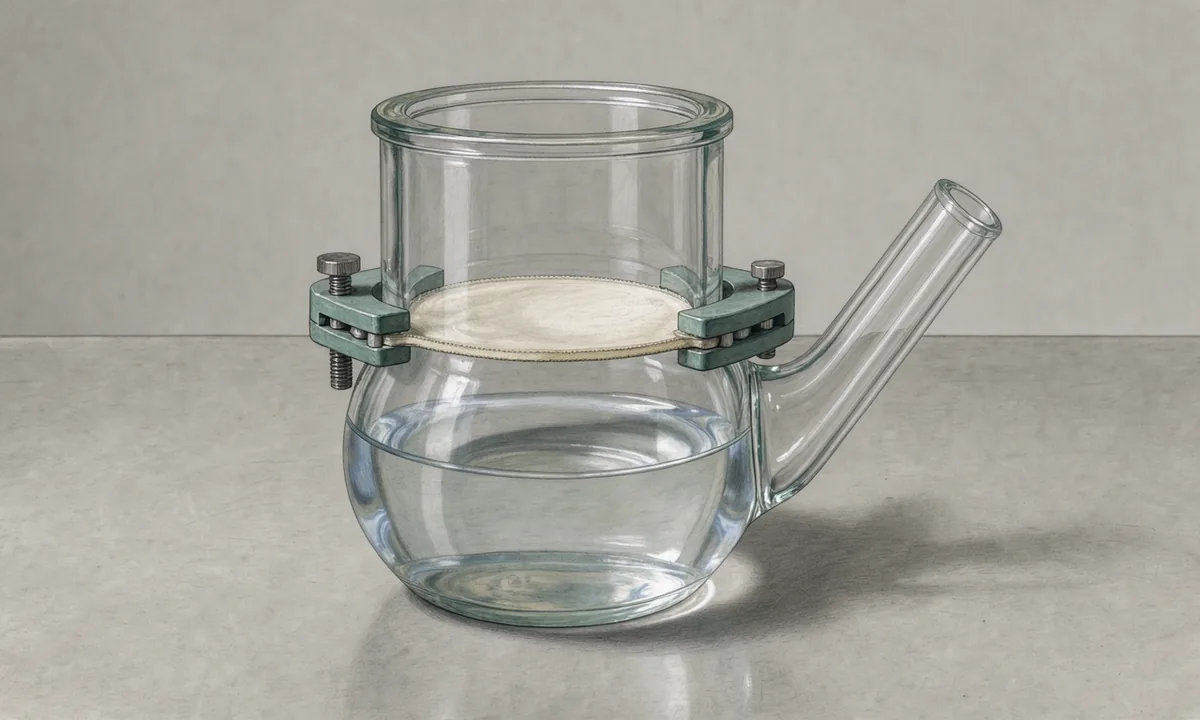
A physical obstacle is an excellent test of an attractive idea. Here the obstacle is skin. In a penetration study using human skin outside the body, researchers measured copper applied as the GHK-Cu tripeptide, examining its passage through skin and its retention within it. The experiment worked with skin layers in an ex-vivo or in-vitro setting.
Over 48 hours, copper both permeated dermatomed skin and remained within it as a dermal depot. A depot here means material retained in the skin. The reported copper amounts over that interval were 136.2 +/- 17.5 micrograms per square centimetre permeating the dermatomed skin, with 97 +/- 6.6 micrograms per square centimetre retained as a dermal depot. Both quantities belong in the account, however untidy they make it. Passage and retention each get an answer. “It gets through” would discard the second half of the result.
I expected delivery to be a preliminary detail, something to dispatch before discussing the appealing effects. I had relegated the barrier to the margin far too soon. Once the question becomes where copper went, the skin stops being a transparent surface between an ingredient and its proposed benefit. It becomes the subject of the experiment. The reported permeability coefficient was 2.43 +/- 0.51 x 10^-4 cm/h, another measure tied to that prepared skin system.
Copper passage and cosmetic outcomes
The study's outcome was copper delivery and dermal retention. That is already a substantial answer to a formulation question. It leaves other questions open: how a living person's skin would respond to a particular preparation, whether an appearance would change, and how long any change would last. Measuring one stage cannot supply observations of every later stage.
There is also a small grammatical detail worth preserving. The measured material was copper applied as the tripeptide. I baulk at expanding that into a complete account of intact peptide reaching every proposed target. The description of the measurement should travel with the result.
I start to distrust the tidiness of “absorption” at this point. Retention and permeation can mean different things for a topical preparation, and the skin-layer experiment explicitly examined that distinction. Neither quantity, on its own, is a judgement about visible skin quality. For those outcomes, the skin findings are the relevant place to look.
The formulation problem
The anti-wrinkle review identifies GHK's poor permeability through the stratum corneum, the skin's outer barrier, as a central challenge. It considers changes to the molecule and delivery strategies, including palmitoylation and microneedle pretreatment. Each approach changes the experimental preparation. The conditions under which it was tested determine the meaning of its result.
A preparation designed to alter passage through skin raises a new question about the preparation itself. Each delivery approach has to earn its place in the argument afresh. The whole purpose of changing delivery is to change what happens to the material. That makes the details consequential.
My optimism is most comfortable here, facing a concrete physical question. The review's assessment of delivery limitations gives a concrete reason to investigate formulations rather than endlessly repeat an ingredient's proposed effects. A future report that connects its preparation, tissue exposure and measured cosmetic outcome would be especially useful. The relationship between a preparation’s measured retention and its eventual visible outcome is the puzzle I would pursue. Retention alone leaves that relationship unresolved. Until then, the glass apparatus has something honest to offer: an answer about passage and retention, with the edge of that answer still visible.